
Robert Jay Wilson Knox
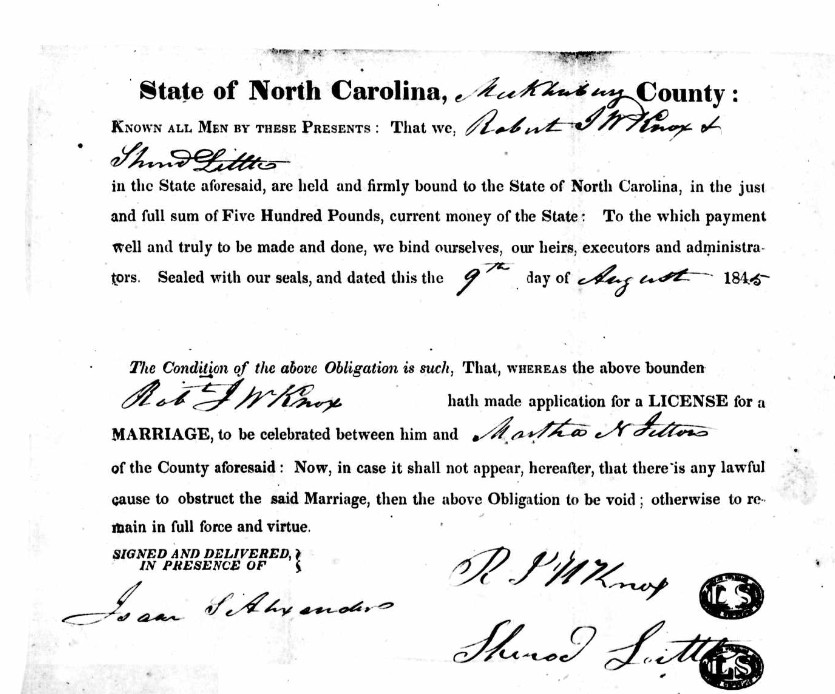
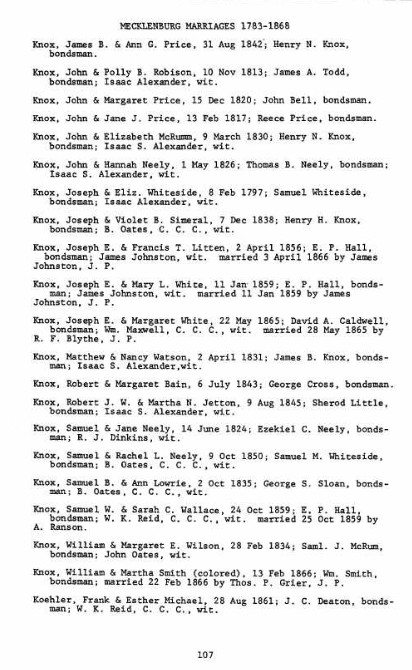
On August 9, 1845, Robert Jay Wilson Knox married Martha Ann Jetton in Mecklenburg County. Together they raised nine children: seven sons and two daughters. Their eldest, John Alexander, was born the following year, with Franklin, Samuel, William, Thomas Brevard, Robert Chalmers, and Joseph following after him. Of their two daughters, Mary Elizabeth died at 24, unmarried, and Margaret Amanda died in infancy. Robert's own middle name likely honored his uncle, Samuel Wilson Jr., the same brother-in-law who had raised Robert's father, John Knox, decades earlier after Captain Patrick Knox's death. The family's habit of naming children after the people who shaped their lives runs deep.
The Blakely Place
Shortly after their wedding, Robert purchased a 126-acre tract on the headwaters of McDowell Creek from his father, John Knox. It became known as the Blakely place, and Robert and Martha's first home stood on this land. When John Knox wrote his will in 1853, he simply confirmed what was already true on paper, that the Blakely place belonged to his eldest son, along with a horse, saddle, bridle, and an old wagon Robert was already using.
A Marriage in Mecklenburg County
Robert and Martha were married in August 1845, with Sherod Little standing as their bondsman. Who Sherod Little was, and what his relationship to the couple might have been, is still a mystery worth chasing down. Martha was the daughter of Alexander Brevard Jetton and Elizabeth Nantz, and the marriage placed her squarely inside a family whose name would show up again and again in Knox land dealings over the following decades.
Civil War and Land Inheritance
When John Knox died in 1860, the rest of his land was divided between his widow, Mary, and their three sons: Robert, John Jr., and Andrew. All three brothers served the Confederacy, Robert as a private in Company B of McLean's Battalion, North Carolina Light Duty Men, at age 44 in 1864. Only Robert survived the war.
In December 1872, Robert purchased his brothers' combined estate at public auction, the court's way of settling what John Jr. and Andrew left behind. He was the highest bidder at $3,000 for a 424-acre tract, its boundaries marked the old way, by rocks, maples, hickories, dogwoods, and a dead pine tree, the kind of detail that only survives in records from people who actually walked their land to measure it.
A Legacy at Bethel Church
In May 1857, Robert was ordained a Ruling Elder at Bethel Presbyterian Church alongside his first cousin, Joseph Robison Gillespie. The Knox family's ties to Bethel ran deep for generations after, with members serving as elders, deacons, and choir members.
Robert himself signed over a small piece of that connection in October 1866, a quitclaim deed transferring just over an acre to the church's trustees. Family history also holds that decades later, when Robert's son Brevard passed away, Brevard's children signed additional paperwork transferring more Knox property to the church, a second act of the same generosity playing out a generation on.
Passing the Land Down
Between 1873 and 1879, Robert divided 400 acres of that inherited tract into four 100-acre parcels and sold one to each of his four eldest sons: to Franklin in January 1873, to John Alexander that same month, to Samuel Edward in May 1875, and to William Andrew in July 1879. It's the same pattern his own father had followed with him, land passed down not all at once, but piece by piece, son by son, as each one came of age.
A note on one other transaction: family records once listed a 222-acre tract as something Robert acquired from Martha's father. The deed record tells the opposite story. In November 1866, Robert and Martha sold 222 acres to a John L. Jetton, not the other way around. Martha's father was actually Alexander Brevard Jetton, so the exact relationship between Robert and this John L. Jetton is still unclear.
Final Years and Estate
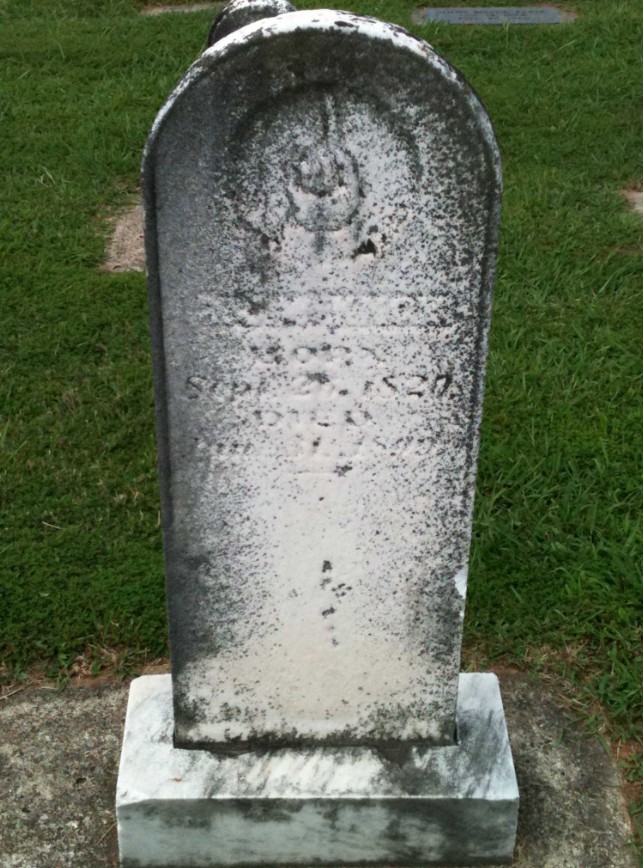
Robert built the family Homeplace near Bethel Church around 1860, close to where Bethel Church Road meets Highway 73 in Cornelius today, and it remained the family home until his death in 1899. His will, written in February 1892, left 22.5 acres to his son William Andrew and divided the remainder of his estate, roughly 300 acres, between his three youngest sons, Thomas Brevard, Robert Chalmers, and Joseph, with one acre held in common between them to keep the family gin house running. Robert Chalmers served as executor. Robert was laid to rest at Bethel Presbyterian Church, the same church he had helped build for more than forty years.
Martha's Final Years
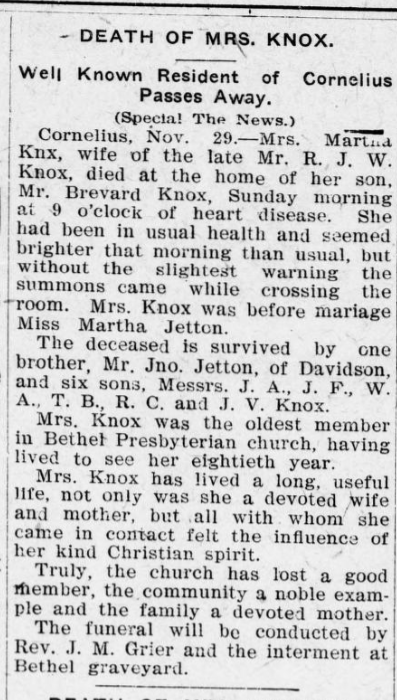
Martha outlived her husband by five years, staying on in Mecklenburg County as a widow until her own death in 1904. Census records from 1900 list her as head of household in Lemley Township, her occupation recorded simply as landlord, with her son Thomas Brevard still living alongside her.
A Country Still Rooted in Cotton
By the late 1800s, Davidson, Huntersville, and Cornelius were still small farming and railroad towns, but they were starting to shift into commercial and industrial centers. Cotton drove that growth, fueling textile mills and shaping the character of each town differently. Davidson grew up around Davidson College, its architecture and culture pulling the town's identity along with it. Huntersville built itself around cotton farms and mills, becoming one of the area's more industrial towns. Cornelius stayed the most rural of the three, and heavy rains often made its roads impassable, pushing farmers to conduct business south of Davidson instead, which quietly laid the groundwork for Cornelius' own development later.
It was against this backdrop that Robert Jay Wilson Knox spent his life farming, acquiring land, and building the kind of quiet, lasting presence that would carry the Knox name through the next generation.