Lake Norman commercial real estate did not begin with lakeside office spaces or polished retail developments, but instead with industrial mills and farmland that shaped our current communities like Cornelius and Davidson. The evolution of real estate in Lake Norman reflects generations of industry, reinvestment, and steady transformation. Today, projects like the ongoing revitalization of Oak Street Mill show how historic preservation and modern commercial growth can move forward together, strengthening both local businesses and community identity.
To understand where commercial development is headed in the Lake Norman region, it would help to understand where it all began.
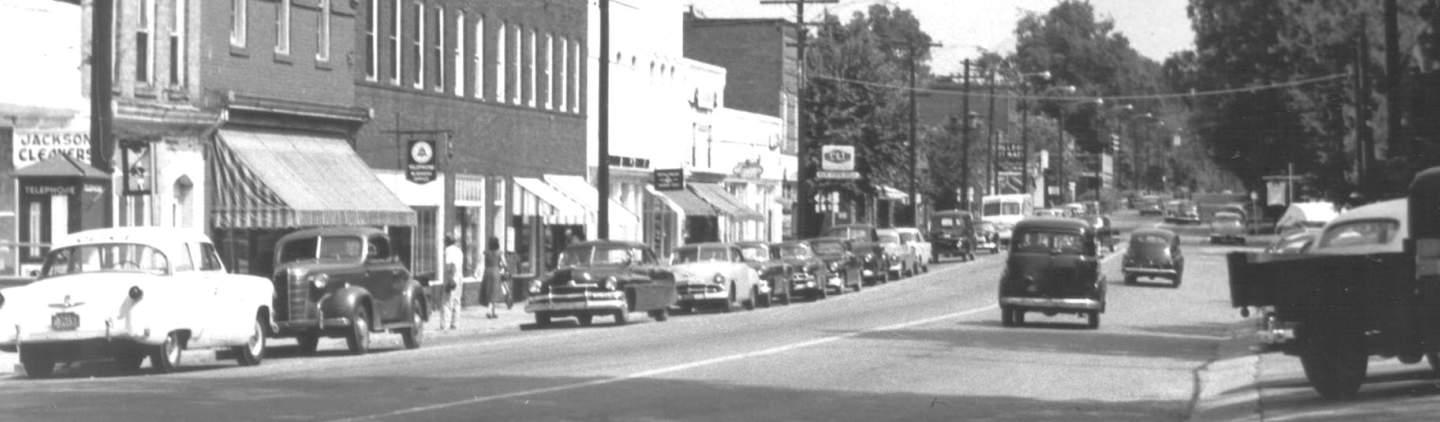
Downtown Main Street in Davidson, NC
The Mill Era That Built the Foundation
Before the lake became the region’s defining feature, mills defined daily life across North Mecklenburg. Textile mills served as economic anchors, providing jobs, supporting families, and shaping entire neighborhoods that grew around them.
Worker housing, corner stores, churches, and gathering places grew around these industrial sites, forming the earliest versions of walkable commercial districts. In many ways, the mill villages established the rhythm of the towns we now recognize as thriving business communities.
The architecture we still see today – red brick, tall windows, uniform shape – tells the story of a region built on production, resilience, and community. That same industrial DNA is still visible across Lake Norman today.
The Gem Yarn Mill and Cornelius’ Industrial Foundation
In the heart of Cornelius stands a piece of history – the Gem Yarn Mill. Built around the end of the 1800s, and opened in 1905, it remains the only surviving mill in Cornelius; a lasting reminder of the industrial roots that started the town.
The cotton mills were the heart of the town at their peak. The daily hum of machinery blended with the rhythm of small-town life as raw cotton was transformed into dyed yarns. For decades, the mill served as a hub of economic opportunity, employing 45 workers at its opening and expanding to 150 employees during its peak years from 1941 to 1946. Farmers, faced with declining cotton prices, often left behind the uncertainty of farm life, in favor of steady mill wages and predictable work schedules.
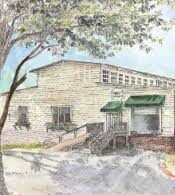
Oak Street Mill
As historian Richard L. Mattson described, “The busy hum of the mill(s) mingled with the commercial life of the town.”
At the center of this economy was mill work.
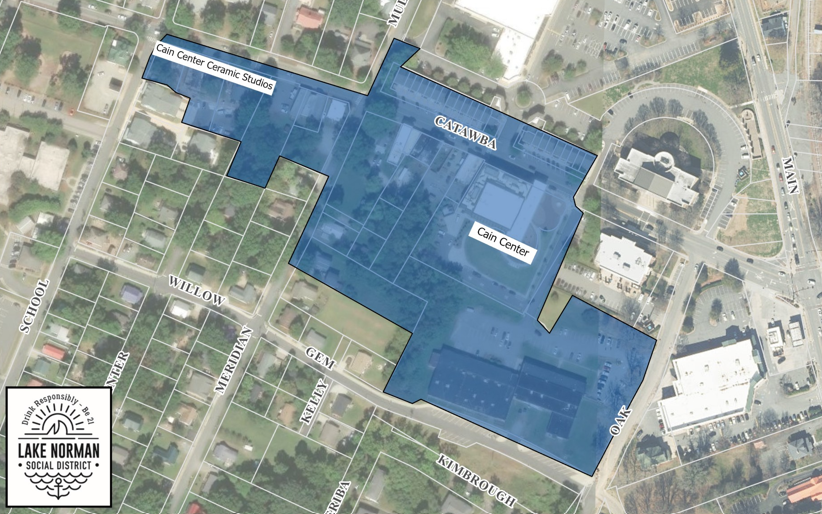
Farmers lined Catawba Avenue with horse-drawn wagons, waiting their turn at the old cotton gin just north of the mill (now known as the Cain Arts Center). Their harvest would be processed and spun into durable cloths, fueling both local industry and broader textile markets.
Railroad connections in the region allowed materials and finished goods to move efficiently, tying Cornelius into the larger textile economy in the South.
The mill’s payroll strengthened local commerce. Steady wages supported barber shops, boarding houses, general stores, and service businesses throughout town.
Among those balancing multiple roles was Wilson Potts, who worked weekends at the mill while employed at Potts Barber Shop before eventually taking over the barbershop himself. Stories like his reflect how mill works and small businesses were intertwined, not separate entities.
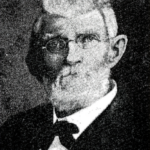
J.B. Cornelius
The vision of a thriving textile operation required more than labor.
The vision also required capital and capable leadership. Early town entrepreneurs lacked the funds to build a mill until J.B. Cornelius stepped in with financial backing. Alongside F.C. Sherrill, T.S. Williamson, and P.A. & R.J. Stough, he helped establish the Gem Yarn Mill (now known as Oak Street Mill), solidifying Cornelius’ place in the textile industry.
The town in turn changed its name from ‘Liverpool’ to Cornelius to honor his impact, not only on industrial development, but also commerce, growth, and community formation.
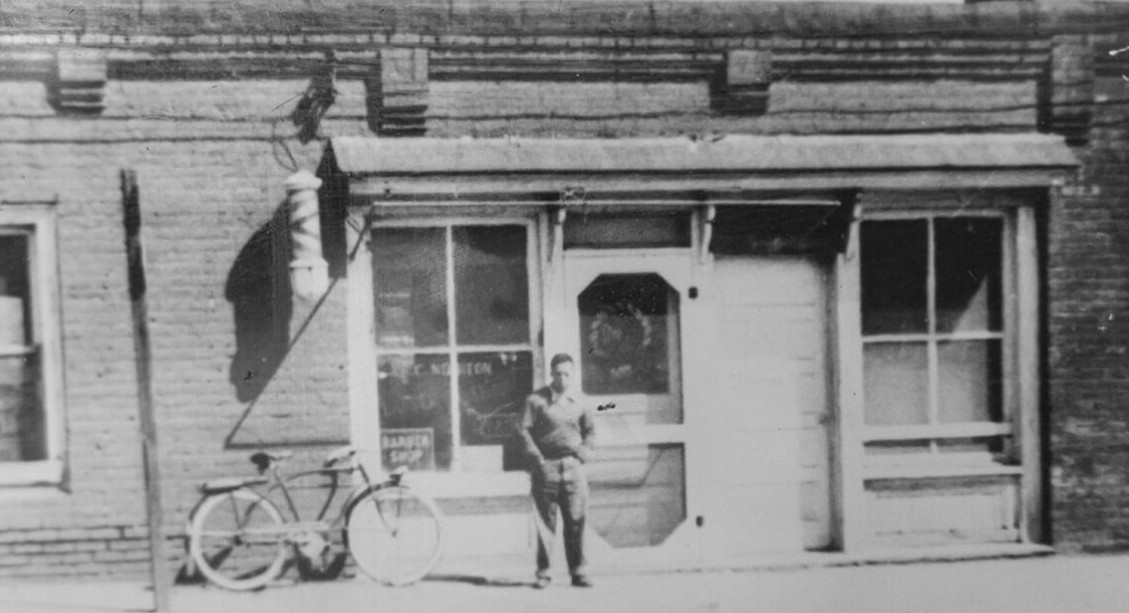
Wilson Potts in front of Potts Barber Shop in the 50's
From Industrial Engine to Community Anchor
As Lake Norman reshaped the region and the economy gradually shifted from production to services and commerce, properties like Gem Yarn Mill faced a pivotal moment. Across the South, many textile mills were demolished or left vacant as industries declined. However, some communities chose revitalization over removal.
Today, the former Gem Yarn Mill lives on as Oak Street Mill, currently undergoing revitalization. Its brick façade and structural scale remain intact, preserving the architectural character that defined Cornelius’ early growth.
At the same time, infrastructure upgrades, improved accessibility, and modern tenant layouts ensure the property functions effectively within today’s Lake Norman commercial real estate market.
This approach protects the integrity of the structure while strengthening its long-term economic viability. The building continues contributing to the local tax base, supports small businesses, and remains woven into the daily life of the community.
Preservation and progress work best when they grow together.
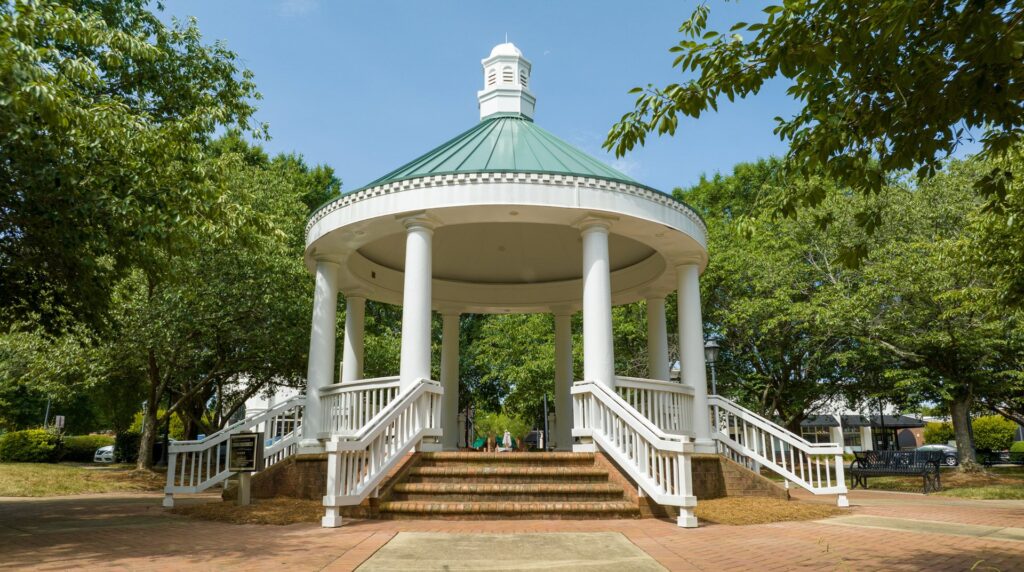
Gazebo in Jetton Village
How Historic Revitalization Strengthens Local Economies
Research consistently shows that historic commercial districts tend to attract small businesses, local restaurants, and independent retailers. Historic buildings offer architectural depth and authenticity that cannot be replicated through generic construction.
People are naturally drawn to places that feel genuine and rooted in history, and that kind of activity matters for local economies. Historic buildings also create opportunities for entrepreneurs.
Studies of walkable downtown districts have found that historic buildings often support a higher concentration of locally owned businesses compared to newer commercial developments. Smaller storefronts and unique layouts give entrepreneurs the opportunity to open shops, restaurants, and services that might not fit into larger retail centers. As a result, those businesses keep profits flowing within the community itself.
Revitalization also allows for focus on improvement rather than replacement.
When a building’s structural foundation remains strong, resources can be directed toward modernization, accessibility, and infrastructure upgrades instead of demolition and rebuilding.
The result is a commercial space that works for today’s tenants while still reflecting the architectural character that helped define the town in the first place. In a region like Lake Norman, where growth continues steadily, this kind of thoughtful redevelopment helps expansion feel connected to the community rather than separate from it.
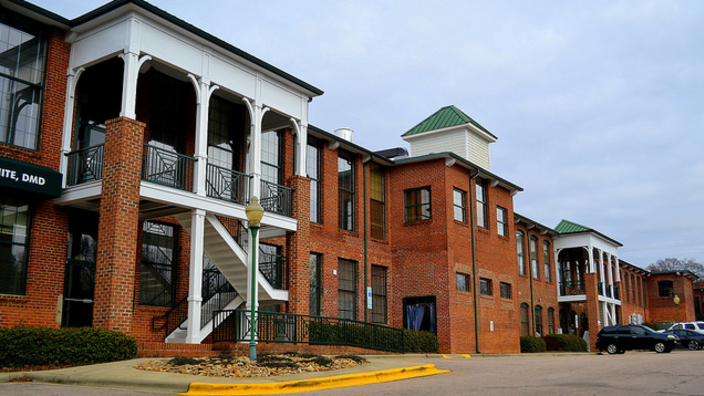
Delburg Mill in Davidson, NC
Revitalization keeps historic corridors active, supports local businesses, and reinforces the identity that makes towns like Cornelius and Davidson feel distinct. Growth becomes stronger when it builds on what already exists.
Growth Changed the Landscape, Not the Identity
As Lake Norman became a defining feature of the region’s identity, land use began to shift. Agriculture and heavy industry gradually gave way to retail, professional services, restaurants, medical offices, and mixed-use developments that served a growing residential population.
Consequently, commercial real estate in Lake Norman adapted to meet new demands while maintaining the character that made these towns desirable in the first place. Downtown corridors gained renewed energy, and historic buildings found opportunities for repositioning rather than removal. Commercial development evolved from supporting production to supporting local business and lifestyle growth.
The question was never whether change and growth would happen, but how to manage it responsibly. That responsibility meant asking how historic structures could remain economically viable while also functioning for modern business needs, and how redevelopment could enhance infrastructure without diminishing architectural character.
So, the real question becomes: how do you meet modern demand without erasing the character that made these towns special in the first place?
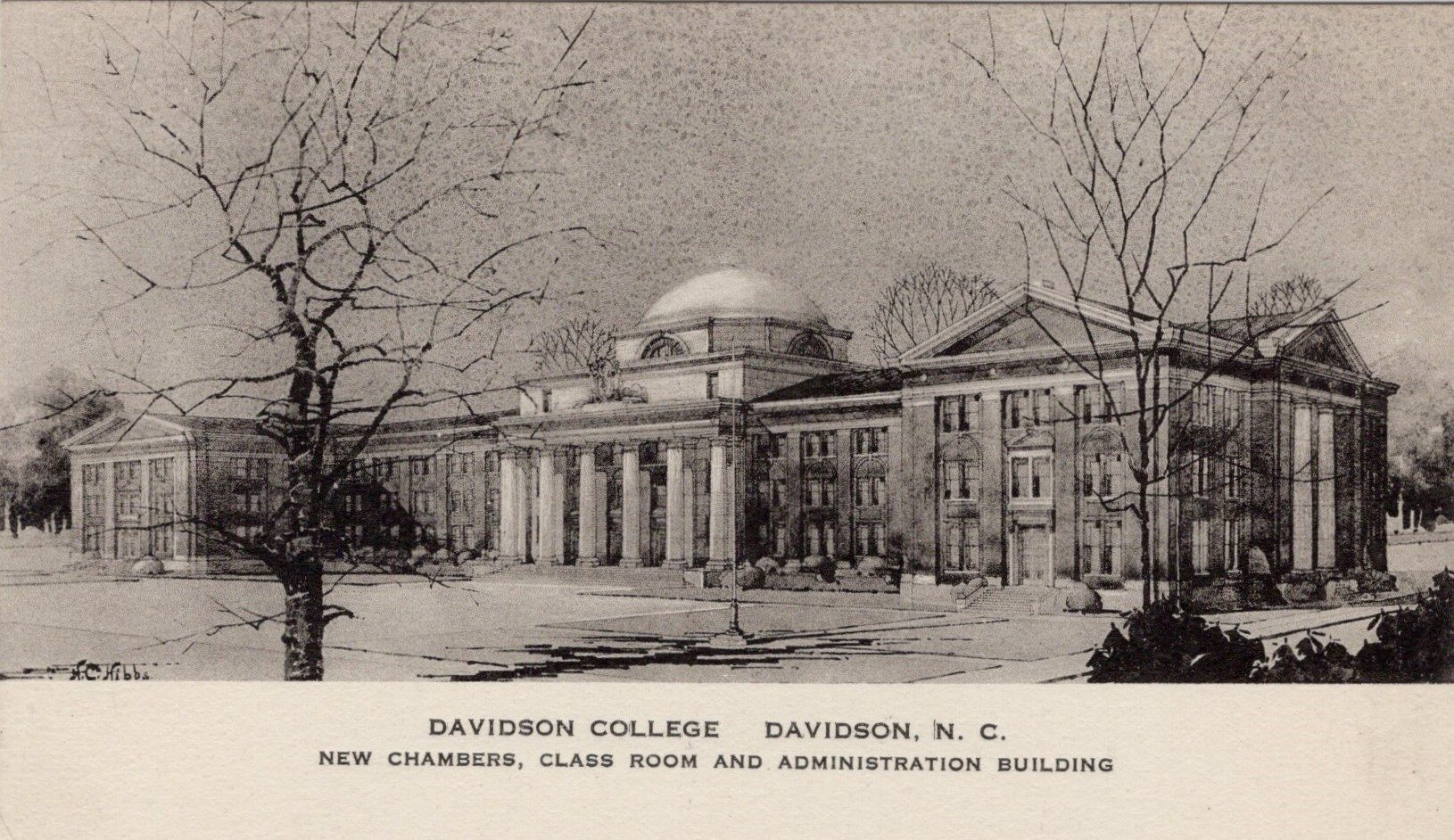
Historic Rendering of Davidson College
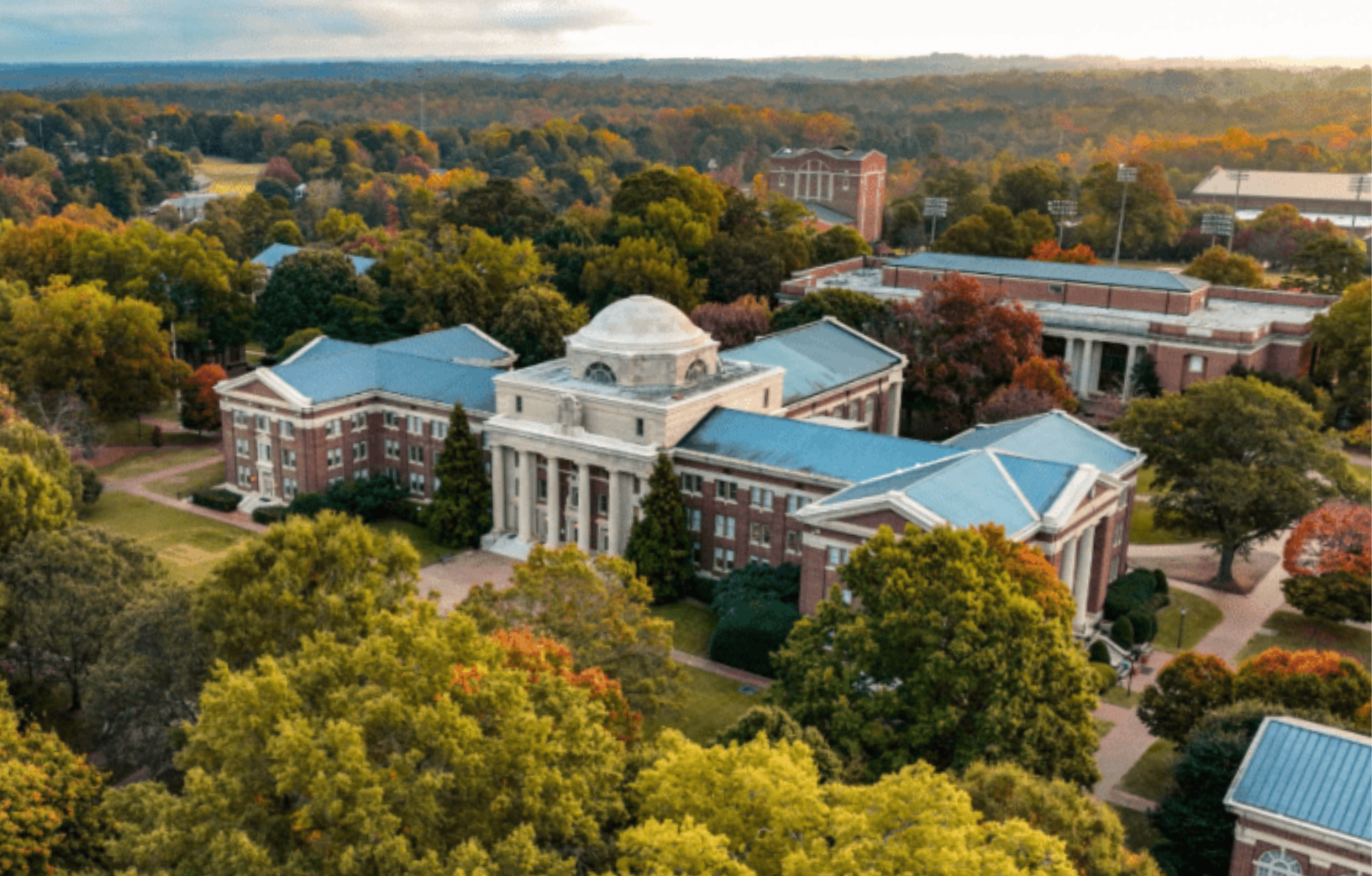
Modern Aerial of Davidson College
Writing the Next Chapter for Lake Norman
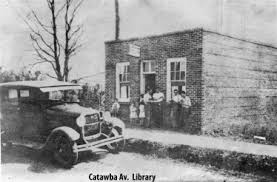
Cornelius Library
For generations, the Knox family has contributed to land use and commercial development across the Lake Norman area. Today, that legacy continues through The Knox Group, where the focus remains on long-term value, strong tenant placement, and sustainable revitalization.
Lake Norman commercial real estate continues to expand, and with that expansion comes responsibility. Responsible development prioritizes structural improvement, infrastructure investment, and tenant viability while respecting the architectural character that defines the region. Oak Street Mill stands as proof that history can remain present while supporting modern growth.
Mill town roots still run deep here, and that foundation deserves care. When revitalization is guided by intention rather than impulse, historic properties remain assets instead of obstacles.
They become anchors for community engagement, economic vitality, and continued growth. Revitalization does not mean replacement, it means improvement. It means ensuring historic structures remain architecturally and economically viable, while updating infrastructure. That balance is what makes development responsible.
If you were to walk the property on a quiet morning, you can still feel it…
The weight of the brick, the scale of the windows, the reminder that hundreds of families once relied on this building for stability and opportunity. Revitalizing a space like this not only carries responsibility, but patience, intention, and respect for the stories embedded in the walls.
Lake Norman’s commercial landscape may have evolved from mill towns into thriving business communities. However, it only did so because each generation contributed something new while building on what came before.
Today, the opportunity is not to overwrite history, but instead to strengthen it.
By reviving historic properties, hosting community events, and improving functionality within preserved structures, modern commercial development can honor the past while supporting future growth.
Mill town roots shaped this community. Modern development, when done with care, ensures those roots continue supporting what comes next. And that is a story worth continuing.
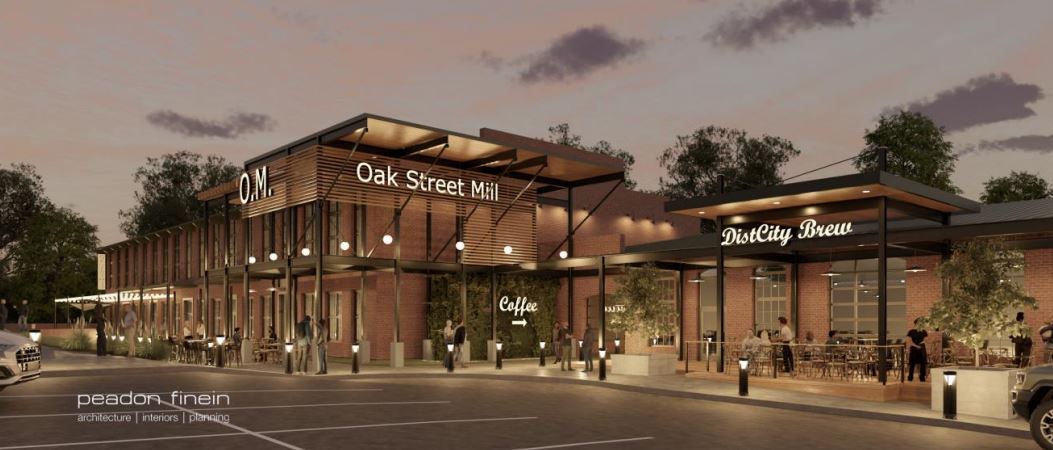
Rendering of Oak Street Mill after renovations are complete